
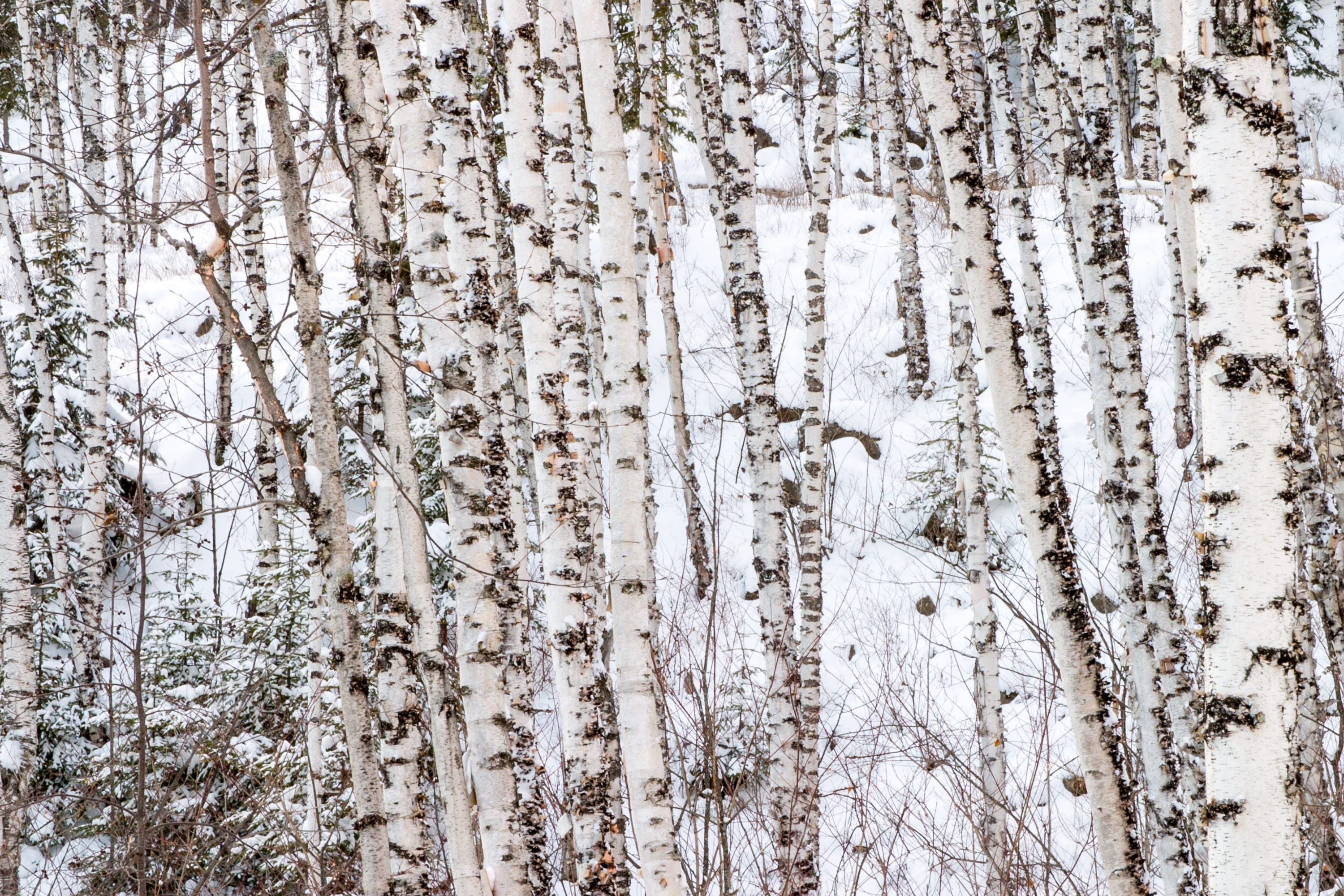
Late winter lingers in the birch grove. White trunks stand over the snow-covered hillside like pillars of quiet resilience. Their black scars show the wind, frost, and time they have faced. Birch trees are common in the Northland. Yet their abilities are extraordinary.
Birch bark contains powerful healing compounds, connecting the tree’s outer scars with its inner ability to heal. Even the famous chaga mushroom grows almost exclusively on birch. Chaga looks like burnt charcoal on the outside, sprouting from wounds in the tree, but inside it reveals a prized orange core that supports vitality. This shows that what seems damaged on the surface can contain strength beneath. Birch bark can even burn when wet, another example of the tree’s hidden resources.
The birch shows that resilience often emerges through enduring hardships, just as its healing compounds appear under battered bark. Even when the forest is still, the sap moves before leaves do. True strength, the birch demonstrates, is not always visible or loud; it is the quiet, steady flow beneath the surface.
“Their fruit will be for food, and their leaves for healing.” — Ezekiel 47:12
The forest may still look like winter. But life is already stirring. Hidden strength is getting ready for the next season. The birch tree is already flowing with the sap of life.